
Championships Won (1)
Career Summary
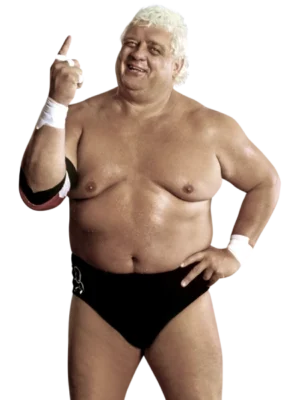
Dusty Rhodes spent nearly five decades in professional wrestling and remains one of the most influential figures the sport has ever produced. Born Virgil Riley Runnels Jr. on October 11, 1945, in Austin, Texas, he built his career on a blue-collar hero concept that was simple but almost unheard of at the time.
He looked and talked like someone from the crowd, not someone above it. He didn’t have a chiseled physique or a technical wrestling pedigree. What he had was an instinct for connection that very few performers in any form of entertainment ever develop, and he used it to become one of the biggest draws in the history of the sport.
Rhodes broke into the business in 1967 with Big Time Wrestling (BTW) and spent his early years working in heel roles in Texas and the Midwest. He adopted the ring name Dusty Rhodes while working for Fritz Von Erich’s Texas territory, and he initially played a rule-breaker managed by Gary Hart, tagging with Don Jardine and later forming The Texas Outlaws with fellow Texan Dick Murdoch.
The Outlaws gave him exposure across multiple NWA territories and the AWA, and the partnership with Murdoch would resurface off and on for years. But his identity as a performer was still taking shape. Rhodes was a natural talker with charisma that exceeded the usual bravado of heel work, and audiences could sense there was something more underneath the character he was playing.
That changed in 1974 during a match in Florida. His tag partner, Pak Song, accidentally struck him, and Rhodes turned on both Song and manager Gary Hart in the moment. The crowd reaction was immediate. Fans had been watching someone they already liked get betrayed, and when he fought back, they were with him completely.
From that point on, Rhodes built an identity around hard work, honesty, and fighting for the everyday person. He called himself “The American Dream,” leaned into the “son of a plumber” image, and positioned himself as the working-class champion in an era when most top stars were either presented as elite athletes or larger-than-life cartoon figures.
Florida Championship Wrestling (FCW) became his home base, and he won the NWA Florida Heavyweight Championship ten times in that territory while also working matches throughout the NWA system. His connection with Florida promoter Eddie Graham, who was also an NWA president during part of this period, helped Rhodes expand his reach beyond a single territory and establish himself nationally.
By the mid-1970s, he was working programs across the country that demonstrated the extent of his drawing power. In 1977, he challenged WWWF Heavyweight Champion “Superstar” Billy Graham in a series of matches at Madison Square Garden that sold out the building. Graham was one of the biggest stars in the country at the time, a bodybuilder with a natural heel charisma, and the program with Rhodes drew enormous crowds because it framed the match as muscle and flash against heart and hustle.
Those New York appearances boosted Rhodes’s reputation past the NWA territories and showed that his act worked in front of any audience.
His first NWA World Heavyweight Championship came on August 21, 1979, when he defeated Harley Race. Race was one of the most respected and feared workers of the era, a genuinely tough man who had survived a near-fatal car accident and carried himself in a way that made the title feel legitimate.
Beating Race meant something, and when Rhodes did it, the reaction from fans was the kind that promoters spend years trying to manufacture. The match was ultimately voted PWI’s Match of the Year. His reign lasted only days before Race won the title back, and Rhodes would experience similar frustrations across his three NWA title runs, with each reign ending relatively quickly.
Jim Cornette, who worked in the NWA during this period, has since explained that the NWA operated on a championship that moved between territories to draw houses, and the organization’s leadership didn’t see Rhodes as the long-term prototype for what they wanted to present. But they also could not deny what he did for business, which is why he kept getting the title.
He won the NWA World Championship three times in total, defeating Race twice and Ric Flair once. Each reign generated significant money, even if the storyline satisfaction was often cut short.
The defining rivalry of his career was against Ric Flair. Where Rhodes was the working-class hero in simple gear talking about struggle and sacrifice, Flair was the limousine-riding, jet-flying champion in expensive robes who bragged about living a life most people could never touch. The contrast was so clean and so relatable that the feud practically wrote itself, and the two men were skilled enough to execute it at the highest level for years.
Their matches ran through the early 1980s and routinely sold out arenas across the Mid-Atlantic region. Flair would retain through questionable finishes, referee decisions, and interference, which only made the audience want to see Rhodes win more desperately.
By 1985, Rhodes had taken on a booking role at Jim Crockett Promotions alongside his in-ring career, and the creative device he most often used had been part of the territory system for years. The finish involved a babyface appearing to win a championship clean, only for the decision to be reversed on a technicality, usually a knocked-out referee or an obscure rules violation.
Florida promoter Eddie Graham is generally credited with developing the concept, but Rhodes used it so frequently in his own programs that it became permanently associated with his name. The “Dusty Finish”, as it’s called, kept challengers credible and champions protected. It gave fans a reason to buy the next show, but it also required an audience that trusted something satisfying was eventually coming.
At the inaugural Great American Bash in Charlotte in July 1985, that trust was tested in front of over 27,000 fans. Rhodes appeared to beat Flair for the NWA Championship, and the building erupted. However, the NWA reversed the decision after the fact based on a referee error. It was a Dusty Finish on the grandest scale. The fans were furious, and that fury was exactly what the promotion needed heading into the fall.
What followed gave the feud its most famous moment. The Four Horsemen attacked Rhodes during a television taping that September. Flair’s faction, which included Arn Anderson, Tully Blanchard, and Ole Anderson, operated as a coordinated heel force that made individual babyfaces seem isolated and overwhelmed, and the attack left Rhodes with a broken ankle that took him off television.
He came back in October and delivered a promo that became known simply as the Hard Times speech. Standing in front of a camera without theatrics or entrance music, he spoke about the working people in America who were losing jobs to automation, struggling to pay bills, and still trying to hold their heads up. He connected that economic pain directly to what Flair and the Horsemen had done to him, arguing that putting hard times on him was the same as putting hard times on the people watching at home.
The promo is considered one of the greatest in wrestling history, and it holds up because it wasn’t a wrestling speech dressed up as something bigger. It was something bigger that happened to take place in a wrestling context.
Their rivalry came to a head at the first WarGames match at The Great American Bash 1987, where Rhodes and his allies faced Flair’s Four Horsemen inside two rings surrounded by a shared cage. The match was chaotic and perfectly fit everything the feud had built toward.
WarGames was a concept Rhodes had a direct hand in developing as a booker, and it became one of the most celebrated specialty matches in wrestling history, running in other forms through WCW and, decades later, WWE.
Rhodes also helped produce the first Starrcade event in 1983, the NWA’s first major supercard, which drew over 15,000 fans to the Greensboro Coliseum and established that the territory could support pay-per-view scale events. He created the Bunkhouse Stampede event format and shaped the overall storytelling direction that made JCP the most compelling alternative to WWF programming in the mid-1980s.
His time there ended in 1988 when he defied a TBS mandate banning blood from television at Starrcade ’88, booking a spot where Road Warrior Animal drove a spike into Rhodes’s eye and drawing a severe laceration on camera. He was fired shortly after.
Rhodes signed with the WWF in 1989 and debuted in polka-dot gear with a crowd-selected valet named Sapphire. His presentation was seen as Vince McMahon’s way of diminishing a man who had been booking the WWF’s chief competition. Rather than the serious working-class hero that NWA fans knew, the WWF presented Rhodes as a dancing, good-natured comedy figure who was easy to laugh with but impossible to take seriously as a top threat.
Rhodes accepted the gimmick, got over with WWF audiences anyway, and worked programs with Randy Savage and Ted DiBiase before his run there ended in 1991. His son Dustin Rhodes (Goldust) made his national debut at the 1991 Royal Rumble during this period, a moment that pointed toward the next generation of the Rhodes family in the business.
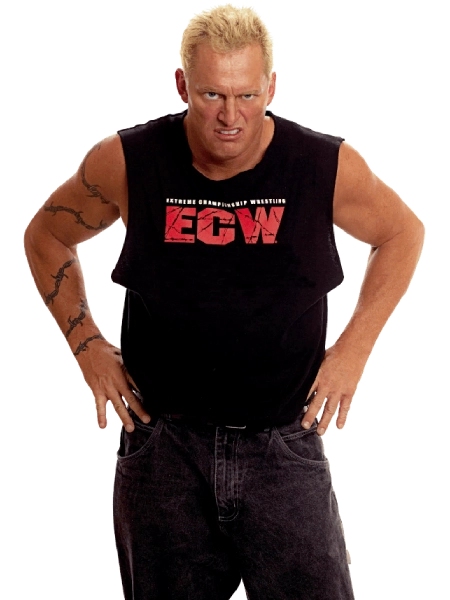
After Dusty Rhodes left the WWF in 1991, he returned to WCW, then transitioned through ECW and TNA in the 2000s, and ran his own small Georgia-based promotion, Turnbuckle Championship Wrestling, from 2000 to 2003. He signed with WWE as a creative consultant in 2005 and gradually transitioned into a backstage role that became his most lasting contribution to the modern era.
As a trainer and producer in WWE’s NXT developmental territory, he worked directly with young talent and helped shape the presentation and storytelling sensibility of wrestlers who went on to define the next decade of the business. Triple H has spoken extensively about what Rhodes contributed to NXT, and the program that emerged from that period reflected his understanding of how to make audiences invest emotionally in performers rather than simply react to them in the moment.
Rhodes is one of six men inducted into each of the WWE Hall of Fame, the WCW Hall of Fame, the Professional Wrestling Hall of Fame, and the Wrestling Observer Newsletter Hall of Fame. He was inducted into the WWE Hall of Fame in 2007, with his sons Dustin and Cody Rhodes presenting him.
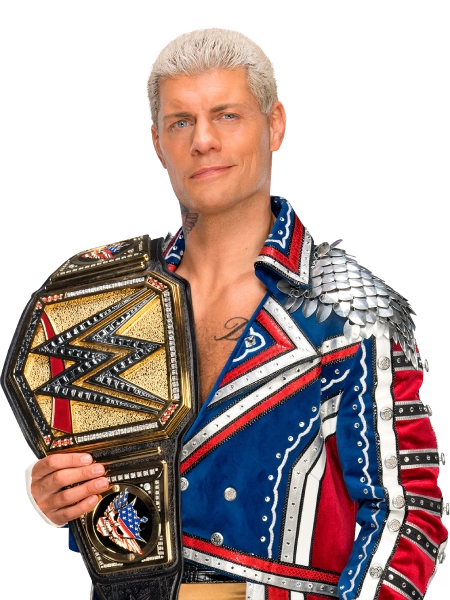
Cody would go on to win the WWE Championship in 2023, completing a story arc that directly invoked his father’s legacy and brought a new generation of fans to understand who Dusty Rhodes was and what he meant to those who grew up watching him.
Dusty Rhodes passed away on June 11, 2015, in Orlando, Florida, from complications related to kidney failure. He was 69. The tributes that followed came from every level of the business, from legends who competed against him in the 1970s to performers he had trained in NXT who had never seen his peak years in person.
The consistency of those tributes pointed to what made him unusual. He mattered to people across different eras and for different reasons. He was a performer, a creative mind, a mentor, and a symbol of what wrestling could be when it spoke honestly to the people who loved it.
Titles Held
| Belt | Won | Opponent(s) | Partner(s) | Event | Days Held |
|---|---|---|---|---|---|
| Nov 26, 1987 | Starrcade '87: Chi-Town Heat | 135 |
Matches
No matches recorded for this wrestler yet.





Share Your Thoughts on This Wrestler
You must be logged in to post a comment.