New Japan Pro-Wrestling is the largest and longest-running professional wrestling promotion in Japan. Antonio Inoki founded the company on January 13, 1972, and over more than five decades it has played a major role in shaping modern pro wrestling.
Inoki launched NJPW after leaving the Japan Pro Wrestling Alliance in 1971. Not long after, Giant Baba left the same system and founded All Japan Pro Wrestling (AJPW) on October 21, 1972. The competition between NJPW and AJPW became one of the defining rivalries in Japanese wrestling for decades.
NJPW’s first event, Opening Series, took place on March 6, 1972, at the Ota Ward Gymnasium in Tokyo in front of about 5,000 fans. Inoki brought in Karl Gotch to help train the roster and shape the promotion’s in-ring style.
Inoki’s approach became known as “Strong Style”, emphasizing hard-hitting offense, submissions, and an athletic presentation. That identity also led to unusual crossover moments, including his 1976 match with Muhammad Ali, which drew international attention and blurred the line between pro wrestling and combat sports.
During the late 1970s and early 1980s, NJPW also affiliated with the National Wrestling Alliance (NWA), maintaining membership from 1975 to 1985. However, rival AJPW’s NWA connections limited NJPW’s access to much of the foreign talent. Still, they managed to pull in some big names, including André the Giant, Hulk Hogan, and Stan Hansen.
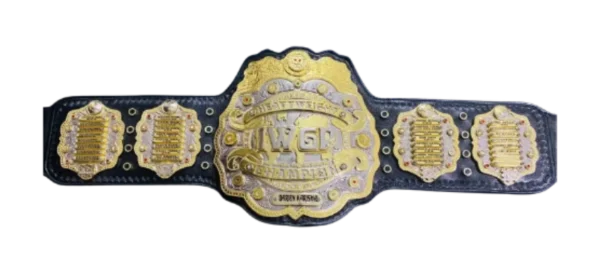
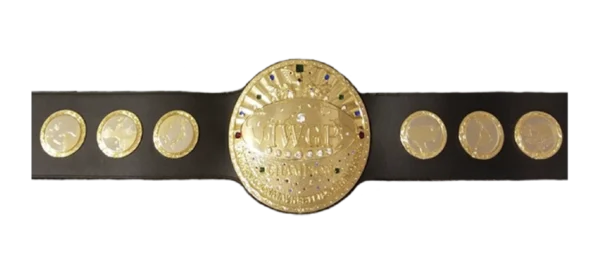
In the early 1980s, Inoki established the International Wrestling Grand Prix (IWGP), a governing body for the promotion’s championships and tournaments. In 1987, NJPW ran a major tournament that led to the creation of the IWGP Heavyweight Championship, which became the promotion’s main world title. The IWGP League tournament would continue to run annually.
That same decade saw the emergence of Tatsumi Fujinami as a major star, along with the debut of the original Tiger Mask (Satoru Sayama), whose innovative junior heavyweight style helped popularize a faster, high-flying approach to Japanese wrestling.
On April 24, 1989, NJPW hit another big milestone by running its first event at the Tokyo Dome, drawing over 43,000 fans. That same year, Inoki stepped down as president, Seiji Sakaguchi took over, and Inoki entered politics with a seat in the Japanese House of Councillors.
After the Tokyo Dome became part of NJPW’s big-event identity, the promotion hit its strongest business run in the 1990s. The main event scene was led by Keiji Mutoh, Masahiro Chono, and Shinya Hashimoto, three wrestlers from the 1984 dojo class who became known as the “Three Musketeers”.
They carried the IWGP Heavyweight Championship picture for most of the decade and gave the company a steady group of top stars fans could follow year after year. The inaugural G1 Climax tournament in 1991 served as their coming-out party, with Chono defeating Muto in the final. The G1 Climax quickly became one of the most prestigious annual events in all of professional wrestling.
In 1992, NJPW partnered with World Championship Wrestling (WCW) to produce the first January 4 Tokyo Dome Show. This event became an annual tradition and is now held under the Wrestle Kingdom banner.
The WCW partnership also produced Collision in Korea in April 1995, a two-day event at the Rungrado 1st of May Stadium in Pyongyang, North Korea, which drew a reported 355,000 fans over both days and remains the most-attended wrestling event in history. The WCW relationship also brought the nWo concept to Japan, with Chono leading the nWo Japan faction to enormous popularity in the late 1990s.
Back in Tokyo, NJPW’s biggest Dome cards during this era regularly drew between 50,000 and 60,000 fans, and the promotion felt like a major national brand in Japan.
By the late 1990s, the business began to slide, and a major reason was a shift in NJPW’s identity. As mixed martial arts surged in popularity in Japan through promotions like PRIDE Fighting Championships and K-1, Inoki became convinced that NJPW needed to incorporate legitimate fighting to remain relevant.
This philosophy, which fans later called “Inokiism”, involved sending professional wrestlers into real MMA fights against trained fighters and bringing MMA competitors into NJPW’s wrestling events. It hurt the product’s credibility with many fans, especially after results like Yuji Nagata’s losses to Mirko Cro Cop and Fedor Emelianenko.
Around the same time, the roster changed in ways that weakened the company. Hashimoto clashed with Inoki over the direction of the company and eventually left to form his own promotion, Pro-Wrestling Zero1. Keiji Muto departed in 2002, defecting to rival AJPW. Attendance and revenue plummeted. Tokyo Dome shows that once drew over 50,000 were pulling in half that number or less, and the weekly television program was moved to a late-night timeslot.
In 2005, with the company near financial ruin, video game developer Yuke’s purchased Inoki’s controlling 51.5% stake in NJPW. This effectively ended Inoki’s 33-year tenure as owner. Inoki went on to found the Inoki Genome Federation (IGF) in 2007. After his departure, wrestler and booker Gedo was given creative control, and NJPW began the slow process of returning to its puroresu roots.
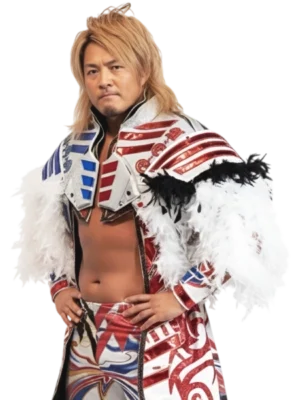
This rebuilding centered on one man: Hiroshi Tanahashi. Charismatic, athletic, and relentlessly optimistic, Tanahashi became NJPW’s ace during its darkest period and is widely credited with saving the company. He drew fans back through compelling matches and sheer force of personality at a time when many had written the promotion off.
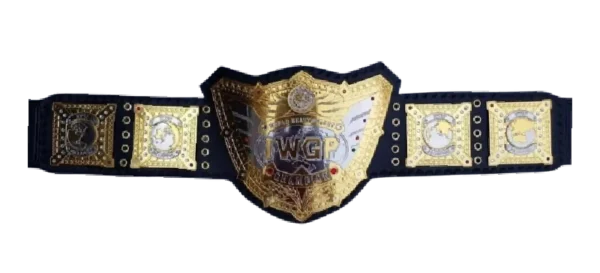
In 2011, NJPW turned a profit for the first time since Yuke’s purchased the company. That same year, the promotion expanded internationally by launching its first United States tour, headlined by the Attack on the East Coast event. NJPW also introduced the IWGP Intercontinental Championship in 2011, adding a new top-level singles title beneath the IWGP Heavyweight Championship.
On January 31, 2012, Yuke’s sold all its shares in NJPW to the card game company Bushiroad for approximately ¥500 million ($6.5 million). This purchase proved to be a turning point.
Once Bushiroad took over, it invested heavily in marketing, production values, and talent development. With Gedo firmly in place as head booker, the company began an era of long-term storytelling that would produce some of the greatest rivalries in wrestling history.
The first major narrative of the Bushiroad era began almost immediately. In February 2012, Kazuchika Okada, a 24-year-old who had just returned from his overseas, defeated Tanahashi for the IWGP Heavyweight Championship in what NJPW called “the upset of the century”. That match launched the Okada vs. Tanahashi rivalry, and over the next several years, it became the promotion’s main storyline, with both men trading the top title in a series of major headlining matches.
As that rivalry carried the heavyweight scene, Shinsuke Nakamura and Tetsuya Naito rose into main-event roles as well, which gave NJPW more than one top act to build around.
That growth led to a second high point in the mid-2010s. Kenny Omega, Will Ospreay, AJ Styles, and the Young Bucks helped pull in a larger international audience, while Bullet Club, founded by Prince Devitt (now Finn Bálor) in 2013, became one of the most successful modern factions in terms of popularity and merchandise.
The next year, NJPW’s international presence grew more directly. In 2014, NJPW announced a working partnership with Ring of Honor (ROH), leading to co-promoted events and talent sharing. Later in 2014, NJPW launched NJPW World, a streaming service modeled after WWE Network, that gave international fans access to the full library and live events with English commentary.
By the middle of the decade, the product was hot again, and the audience was larger. Tetsuya Naito’s transformation into a lethargic, anti-establishment heel after a stint with CMLL’s Los Ingobernables faction created one of the promotion’s most popular characters.
In 2016, Kenny Omega won the G1 Climax, becoming the first non-Japanese winner of the tournament. Two years later, he reached the peak of that run by defeating Okada for the IWGP Heavyweight Championship at Dominion in June 2018, becoming the first Canadian to hold the title.
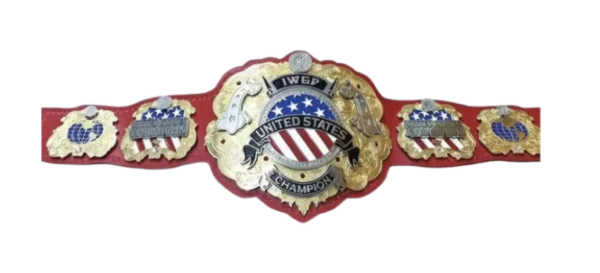
Around the same time, NJPW pushed harder into the U.S. market. In May 2017, the company created the IWGP United States Heavyweight Championship as part of its American expansion plans.
By 2019, NJPW’s annual attendance had reached over 464,000, up from roughly 100,000 in 2011. NJPW also ran bigger U.S. events in this period, building on the ROH relationship and the growing international popularity of names tied to Bullet Club and the main event scene.
In 2020, COVID-19 hit, and NJPW’s plans slowed down fast. They would end up cancelling 64 events in 2020, and attendance dropped to around 180,000 for the year. International travel restrictions cut off much of the foreign talent pipeline and disrupted the momentum of expansion plans. To counter that, NJPW launched NJPW Strong in August 2020 as a weekly show produced in the U.S., which became one way to keep American activity going during a complicated stretch.
Inoki’s death in October 2022 marked the end of an era for the company’s founder. NJPW continued leaning into outside partnerships in the modern landscape, including the first AEW x NJPW: Forbidden Door event in June 2022. Around this period, NJPW also expanded its women’s title presence with the IWGP Women’s Championship, created in 2022 and defended with Stardom involvement.
In late 2023, NJPW and sister promotion World Wonder Ring Stardom (also owned by Bushiroad) established the Asia-Pacific Federation of Wrestling (APFW), an interpromotional body connecting wrestling promotions across the region. NJPW also became a founding member of the United Japan Pro-Wrestling (UJPW) alliance, a cooperative effort among Japanese promotions.
In December 2023, Hiroshi Tanahashi was named president of NJPW, succeeding Takami Ohbari. In April 2024, NJPW fully acquired Stardom, and the IWGP Women’s Championship was introduced to bring women’s wrestling under the NJPW banner.
NJPW continues to operate as the largest wrestling promotion in Japan, with its programming airing on TV Asahi, its events streaming on NJPW World, and its roster featuring a mix of homegrown talent and international stars. The promotion’s influence on the global wrestling industry is difficult to overstate.
Its emphasis on athletic competition, long-term storytelling, and tournament-based structures has shaped how wrestling is consumed and appreciated worldwide. From the Strong Style philosophy of its founder to the modern era built by Tanahashi, Okada, Naito, and the generations that followed, NJPW remains one of the most important institutions in professional wrestling history.
Share Your Thoughts on This Promotion
You must be logged in to post a comment.