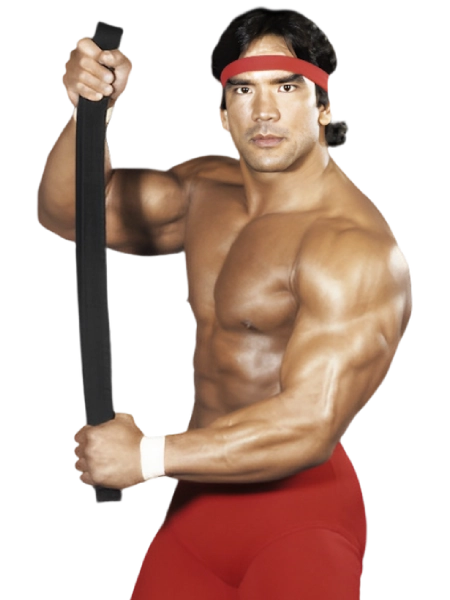
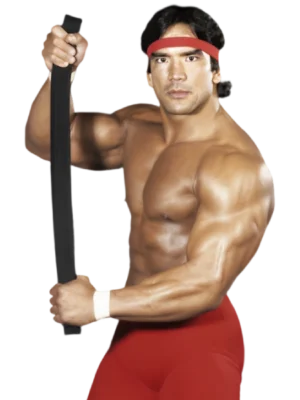
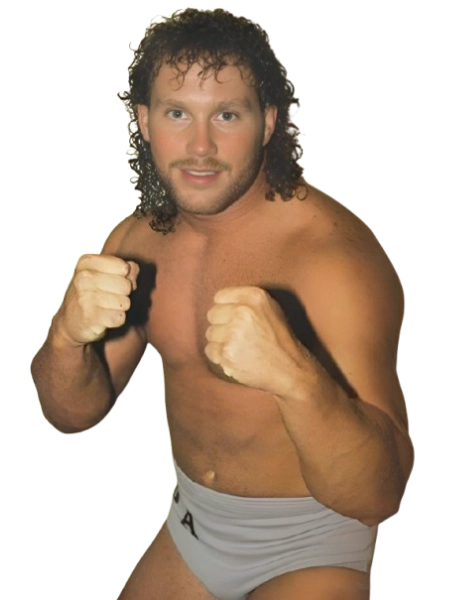
Ricky Steamboat built one of the most respected careers in professional wrestling without ever playing a villain, cutting wild promos, or relying on his size. Born Richard Henry Blood on February 28, 1953, in West Point, New York, he worked his entire career as a babyface. That was rare at the top level, and it became a big part of how the industry remembered him. He was one of the few performers who never needed a heel turn to stay over, because the quality of his work was always enough.
He trained under Verne Gagne and made his first appearances in the AWA in the mid-1970s before heading to Championship Wrestling from Florida, where promoter Eddie Graham gave him the ring name Ricky Steamboat, which was borrowed from veteran Hawaiian wrestler Sammy Steamboat, whose style and look reminded Graham of the young prospect.
From CWF, he moved to Jim Crockett Promotions in the Mid-Atlantic territory in 1977 and spent the next eight years becoming one of the best workers in the country.
His first major program in the territory came almost right away. He challenged a young Ric Flair for the Mid-Atlantic Television Championship in June 1977 and beat him. Flair was just rising to the top of the heel ranks at that point, and the tension between the two men started a rivalry that would follow both of them for the next decade.
During his Mid-Atlantic years, Steamboat spent much of his time in tag team matches, forming strong partnerships with Paul Jones, a veteran heel in the territory who initially worked alongside him before eventually turning on him, and later Jay Youngblood, a young babyface of Native American heritage who became one of the most popular acts in the Carolinas.
His team with Youngblood was especially productive, winning the NWA World Tag Team Championship five times together and drawing strong crowds across the region. The tag work kept Steamboat prominent while Flair ran the top of the singles division, and the two crossed paths often enough that fans never forgot their rivalry was far from over.
By the mid-1980s, Steamboat had proven himself enough that the WWF came calling. He debuted there in 1985 and built toward what became the best match on the WrestleMania III card. Randy Savage was the Intercontinental Champion going into that event, a calculating heel who had attacked Steamboat during an episode of WWF Superstars, driving the ring bell into his throat and putting him on the shelf with a storyline injury.
When they met on March 29, 1987, in front of 78,000 fans at the Pontiac Silverdome in Michigan, the match produced 22 near-falls in roughly seventeen minutes. Steamboat won the title by catching Savage in an inside cradle. Pro Wrestling Illustrated and the Wrestling Observer Newsletter both named it Match of the Year.
The bout remains one of the clearest examples of what a midcard match can pull off on a major show, and it nearly stole the spotlight from the Hulk Hogan and Andre the Giant main event that the whole card had been built around.
What followed was one of the more avoidable stretches in his career. Steamboat asked for time off after winning the title to be with his wife for the birth of their son. WWF management responded by stripping him of the title and handing it to the Honky Tonk Man in June 1987. When Steamboat returned, he wasn’t pushed back into any meaningful spot, and he left the WWF in early 1988 without ever regaining the momentum he had built at WrestleMania.
He returned to the NWA in January 1989, and what came next was the best stretch of his singles career. The NWA at that point was running under the WCW banner after Ted Turner bought Jim Crockett Promotions, and Ric Flair was still the world champion.
Steamboat showed up as a surprise partner for Eddie Gilbert on an episode of World Championship Wrestling and pinned Flair in a tag match, which set up their first major singles program in years.
At the Chi-Town Rumble in February 1989, Steamboat defeated Flair to win the NWA World Heavyweight Championship. They followed it with a two-out-of-three falls match at Clash of the Champions VI in April, which ran nearly an hour and aired on cable television directly against WWF’s WrestleMania V on pay-per-view. Steamboat successfully retained the title in that match. However, in their third bout at WrestleWar in May, Flair managed to reclaim the championship.
All three bouts received five-star ratings from the Wrestling Observer Newsletter and stand as one of the best match series in the history of the sport.
Steamboat’s run ended in a contract dispute with WCW after the third Flair match. He returned to WCW in late 1991, showing up as a surprise partner for Dustin Rhodes at Clash of the Champions XVII after Barry Windham was injured and couldn’t compete.
He and Rhodes won the WCW World Tag Team Championship that night. Steamboat later picked up the WCW Television Championship by defeating Steve Austin in September 1992. At that point, Austin was still climbing through the card as the cocky “Stunning” Steve Austin character, and the program between them had real momentum before a back injury forced Steamboat out of the ring in 1994 and ended his run.
He had one last major in-ring moment at WrestleMania 25 in 2009, where he faced Chris Jericho in a match that reminded fans how sharp he still was at 56 years old.
Later that year, he was inducted into the WWE Hall of Fame, adding another honor to a career that had already included the NWA World Heavyweight Championship, the WWF Intercontinental Championship, and eight NWA/WCW World Tag Team Championships.
He was also inducted into the Wrestling Observer Newsletter Hall of Fame in 1996, the Professional Wrestling Hall of Fame in 2002, and the NWA Hall of Fame in 2012.
Steamboat’s place in wrestling history comes from the way he made matches feel believable from start to finish. He sold damage in a way crowds believed, kept a pace few wrestlers could match, and always understood how to build a match without losing the story inside it. That’s why fans still return to his WrestleMania III match with Randy Savage and his 1989 series with Ric Flair. Those matches remain the clearest examples of who he was in the ring and why his work still holds up.







Share Your Thoughts on This Wrestler
You must be logged in to post a comment.