
Championships Won (2)
Career Summary
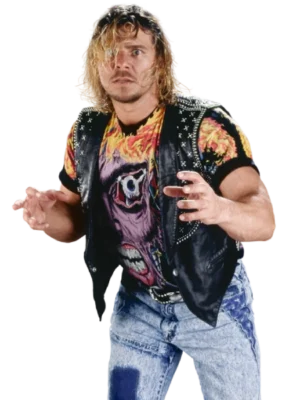
Brian Pillman was an American professional wrestler known for his aerial offense, intensity, and psychological approach to character work. After a football career at Miami University and brief stints with the Cincinnati Bengals and Calgary Stampeders, he trained under Stu Hart and debuted in Stampede Wrestling in 1986, earning tag gold with Bruce Hart as Flyin’ Brian.
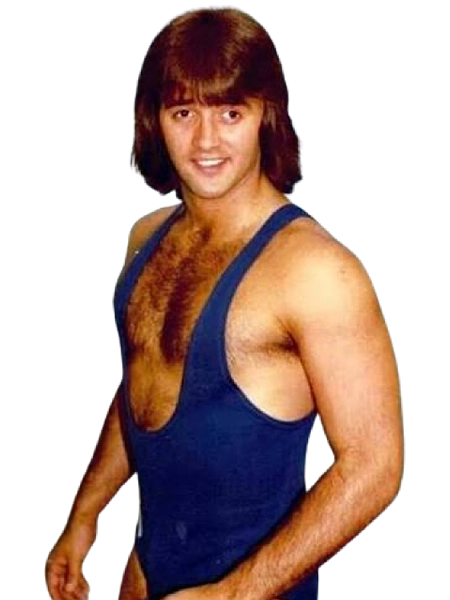
His move to World Championship Wrestling (WCW) in 1989 raised his profile, where he had an NWA United States Tag Team Title run with Tom Zenk and two Light Heavyweight Title reigns built around an aerial style influenced by lucha libre and Japanese wrestling.
He then teamed up with “Stunning” Steve Austin as The Hollywood Blonds, a heel tag team that became part of one of WCW’s most entertaining tag teams. The pair backed that up by winning the NWA and WCW World Tag Team Championship on March 17, 1993, defeating Ricky Steamboat and Shane Douglas. The team was broken up by WCW later that year, which both men later linked to backstage politics.
By late 1995, after the Four Horsemen reunion, Pillman was part of the reformed group alongside Ric Flair, Arn Anderson, and Chris Benoit. During that period, he began developing the Loose Cannon character, a persona built around unpredictable on-screen behavior that drew from the worked-shoot style.
At SuperBrawl VI on February 11, 1996, during a strap match with Kevin Sullivan, Pillman grabbed the microphone and said, “I respect you, booker man,” publicly identifying Sullivan as WCW’s booker on live television. WCW president Eric Bischoff released Pillman from his contract the following day.
Bischoff later said the release was meant to be part of the angle, allowing Pillman to work in ECW before returning to WCW, but Pillman instead used the legitimate contract freedom to negotiate elsewhere and did not return.
He debuted for ECW at CyberSlam on February 17, 1996, and made several appearances there over the following weeks, using that brief run to push the Loose Cannon persona even further. Before that next chapter could fully take shape, though, his career changed dramatically.
On April 15, 1996, while contract talks were still ongoing, Pillman fell asleep at the wheel in Kentucky, and his vehicle hit a tree and flipped. He was thrown from the vehicle and suffered a shattered ankle along with severe facial injuries, spending time in a coma after the crash. Doctors fused the ankle in a fixed position, which permanently limited his mobility and ended any realistic chance of returning to the high-flying style that had defined his earlier career.
Even with those injuries, WWF still saw major value in him. He signed a guaranteed contract on June 10, 1996, and because he wasn’t yet ready for regular ring work, he was brought in first as a commentator alongside Jim Ross.
That role kept him on television while he recovered and also let WWF lean into the unpredictability that had made the Loose Cannon character feel so different from a standard wrestling persona. When he first arrived, he was presented as an ally of Stone Cold Steve Austin, which gave his early WWF appearances a natural link to one of the company’s biggest rising stars.
That connection soon turned into one of the most memorable feuds of the era. After tensions grew between the two, Austin attacked Pillman during an interview segment, and the rivalry escalated into the infamous November 4, 1996, home-invasion angle, where Pillman confronted Austin with a gun on live television.
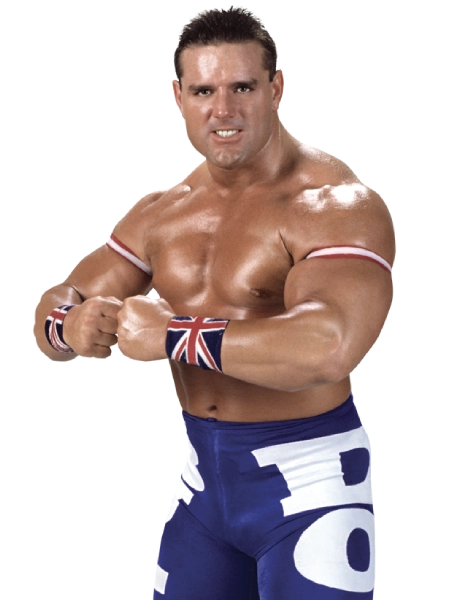
As his recovery progressed, Pillman gradually returned to a more active on-screen role, and by the spring of 1997, he was wrestling more regularly. After WrestleMania 13, he joined the Hart Foundation alongside Bret Hart, Owen Hart, Davey Boy Smith, and Jim Neidhart, becoming part of one of the WWF’s central faction storylines of that year.
He frequently teamed with the group in multi-man matches against Austin and his allies, including the Canadian Stampede main event in July 1997.
From there, Pillman shifted into his final major program, a feud with Goldust that carried him through the summer and into the fall of 1997. It became the last sustained storyline of his career and showed that, even after the accident had changed him physically, he was still an effective television character who could add tension and unpredictability to almost anything he was part of.
He died on October 5, 1997, at age 35 from a previously undetected heart condition, leaving behind a career that many in wrestling believed was still evolving and had not yet reached its full ceiling.
Titles Held
| Belt | Won | Opponent(s) | Partner(s) | Event | Days Held |
|---|---|---|---|---|---|
| Feb 29, 1992 | SuperBrawl II | 112 | |||
| Oct 27, 1991 | Halloween Havoc 1991 | 59 |
Matches
2 Matches| # | Date | Promotion | Match Details | Match |
|---|---|---|---|---|
| 1 | Sep 22, 1997 | WWF | Tournament Match | 1997 WWF Intercontinental Championship Tournament Raw is War | View Match: Brian Pillman lost to Owen Hart, Sep 22, 1997 |
| 2 | Sep 9, 1997 | WWF | Tournament Match | 1997 WWF Intercontinental Championship Tournament Raw is War | View Match: Brian Pillman defeated Dude Love, Sep 9, 1997 |






Share Your Thoughts on This Wrestler
You must be logged in to post a comment.