
Career Summary
Paul Bearer (William “Bill” Moody) was an American professional wrestling manager for WWF/WWE, Championship Wrestling from Florida, and World Class Championship Wrestling, best known for guiding The Undertaker, Kane, and Mankind. Born in Mobile, Alabama, in April 1954, he grew up a devoted wrestling fan, photographed Gulf Coast Wrestling shows as a teenager, and learned the business from ringside.
After graduating from high school in 1972, Moody enlisted in the U.S. Air Force and served four years at Keesler Air Force Base. While in and after the service, he took night classes and began working in funeral homes, later earning his mortuary science degree and state licenses as a funeral director and embalmer. This funeral background would later define his most famous character on TV.
Moody first entered the ring in 1974 in small southern promotions, sometimes under a mask as Mr. X. By 1979, he shifted to managing, creating the flamboyant heel persona “Percival ‘Percy’ Pringle III,” a blond, loud, rich-kid character who fit the territorial era. He developed on-air timing, promo delivery, and the knack for guiding heat toward his wrestlers.
In 1984–85 he resumed wrestling full time as Percy Pringle in Championship Wrestling from Florida and World Class Championship Wrestling in Texas. In those circuits, he managed a long list of names, including Rick Rude, The Missing Link, The Great Kabuki, Matt Borne, Buzz Sawyer, Lex Luger, Kamala, and the Dingo Warrior (later Ultimate Warrior).
He also worked early with a young Steve Williams, who would become “Stone Cold” Steve Austin. These runs gave him steady TV time, road experience, and a reputation as a dependable “manager of champions.”
Rick Rude recommended Moody to the World Wrestling Federation (WWF), and in early 1991, he arrived on TV as “Paul Bearer,” a name built on his real-life mortician’s trade. He replaced Brother Love as The Undertaker’s manager and instantly clicked with the character.
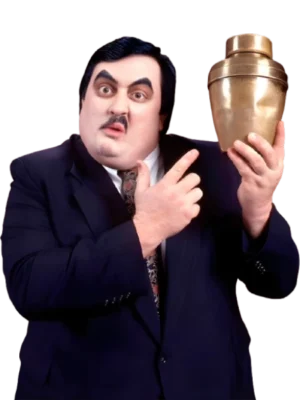
Bearer wore the black suit and funeral makeup, spoke in a trembling, high-pitched voice, clutched a gold urn, and repeated the line fans still remember: “Ohhh yes!” The urn was used as a prop to “restore” Undertaker’s power during matches, and Bearer’s frightened yet scheming manner became part of the act’s rhythm on TV and pay-per-view.
For five years, he stood at Undertaker’s side, building the aura through promos, distractions, and finishes that involved the urn. That bond finally cracked at SummerSlam 1996 in the first-ever Boiler Room Brawl.
After a brutal fight between Undertaker and Mankind, Bearer shockingly struck Undertaker with the urn and gave it to Mankind, turning heel and ending the original partnership. The turn kept the Undertaker–Mankind feud hot through the fall.
In 1997, Bearer escalated his on-screen vendetta by introducing Kane, presented as Undertaker’s long-lost, scarred younger brother, a character tied to a tragic backstory Bearer claimed to know. Kane debuted at Badd Blood: In Your House in October 1997, ripped the Hell in a Cell door off its hinges, and cost Undertaker the match against Shawn Michaels.
This launched the long Undertaker–Kane rivalry and made Bearer the mouthpiece who threaded their family story together on TV.
Across 1998–99, Bearer shifted allegiances as stories demanded, managing Kane and Mankind at different points, then reuniting with Undertaker during the Ministry of Darkness run. By late 1999, injuries and angles moved him off TV.
Bearer returned briefly in early 2000 as Kane’s manager, then worked behind the scenes as a road agent and stage manager. Years of health struggles followed, and WWE helped arrange gastric bypass surgery in 2003. He reappeared on-screen at WrestleMania XX in March 2004 with The Undertaker’s full “Deadman” return, then was written into a storyline where the Dudley Boyz and Paul Heyman kidnapped him.
The angle climaxed at The Great American Bash in June 2004, where Undertaker beat the Dudleys in a handicap match and, in story, pulled a lever that entombed Bearer in wet cement. WWE immediately clarified on TV that he was alive, but the stunt wrote him off so he could focus on his health.
Paul Bearer made a surprise comeback on SmackDown in September 2010, rising from a casket to hand the urn back to Undertaker during his feud with Kane. Weeks later, he betrayed Undertaker again at Hell in a Cell 2010 by aiding Kane with the urn, and then accompanied Kane for a time before fading from TV. He made scattered on-screen and independent appearances in 2012.
As a manager, Bearer rarely took bumps, but he was involved in finishes and ringside chaos. His value was timing, facial expressions, and the way he fed crowd energy back into his wrestler’s comebacks. The urn was his signature prop, used for distraction, for “power,” or as a weapon in big moments.
His promos leaned on theatrical delivery and simple lines that kids could repeat. With Undertaker he added gothic flavor; with Mankind and Kane he underscored menace and family drama. WWE’s own historical pieces consistently highlight his turn at SummerSlam 1996 and Kane’s 1997 debut as era-defining manager moments.
Moody died in Mobile on March 5, 2013, at age 58, following respiratory issues that weekend and a heart attack attributed to supraventricular tachycardia. Mainstream outlets and WWE covered the news widely, reflecting how well known the Paul Bearer character had become.
WWE inducted Paul Bearer into the WWE Hall of Fame in April 2014. Kane delivered the induction, Bearer’s sons accepted, and The Undertaker appeared to pay respects. The image of the small, pale manager clutching the urn beside The Deadman remains one of pro wrestling’s most enduring visuals.
Former Wrestlers Managed


Walk Out Music
Ring Names
- Paul Bearer Current
- Percy Pringle III
- Billy Moody
Nicknames
- The Father of Destruction
Catchphrases
- “Ohhh yes!”
- “The power of the urn!”
- “Rest in peace!”
Photos

Join the Discussion
You must be logged in to post a comment.