
Championships Won (3)
Career Summary
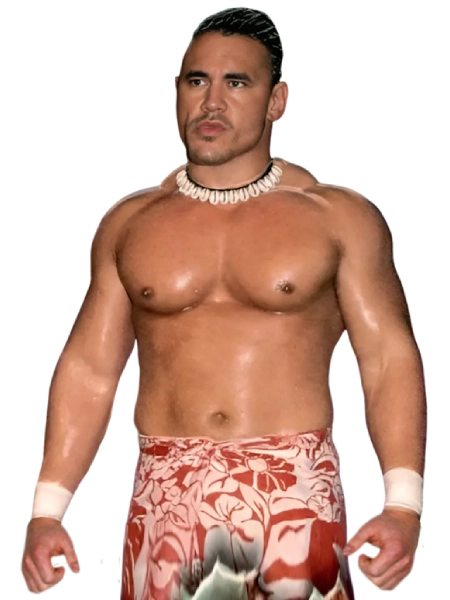
Jimmy “Superfly” Snuka was a Fijian-American professional wrestler whose in-ring career stretched from the late 1960s into the 2010s. He became one of the most popular stars of the early to mid-1980s WWF era, known for bringing a high-flying style to big arenas and for making the Superfly Splash one of wrestling’s most famous finishers.
He was a six-time NWA Pacific Northwest Heavyweight Champion, a six-time NWA Pacific Northwest Tag Team Champion, a two-time ECW Heavyweight Champion, and a WWE Hall of Fame inductee.
Snuka entered wrestling after time spent in bodybuilding, and he trained under Danny Hodge before stepping into the ring. He broke in under island-based promoters and worked early on with a rugged, athletic look that later became part of his “Superfly” identity.
In 1970, he worked as Jimmy Kealoha and wrestled Maxwell “Bunny” Butler in Hawaii, a match widely listed as his pro debut bout and the start of his full-time wrestling run. As he gained experience, he moved more of his work to the mainland and began building his name across NWA territory circuits.
Snuka’s first major sustained success came in Don Owen’s NWA Pacific Northwest territory, where his power and sudden bursts of aerial offense made him stand out. On November 16, 1973, he defeated Bull Ramos to win the NWA Pacific Northwest Heavyweight Championship, beginning a run that eventually reached six reigns with that title. He also became a steady tag team headliner, winning the NWA Pacific Northwest Tag Team Championship six times with Dutch Savage while feuding with top local names and visiting stars.
That Portland stretch turned him from a promising athlete into a proven main-event draw, and it’s where the Jimmy Snuka name became a lasting part of his presentation.
In January 1982, Snuka entered the WWF as a villain, managed by Captain Lou Albano, and was immediately positioned as a threat to champion Bob Backlund. Their rivalry leaned on Snuka’s aggression and athleticism, and it peaked with a widely remembered steel cage match at Madison Square Garden on June 28, 1982, where Snuka’s dramatic leap from the top of the cage helped cement him as a major attraction even in defeat.
Later in 1982, a storyline rift with Albano moved Snuka into a fan-favorite role, setting him up for bigger featured feuds while keeping his wild, unpredictable edge.
That momentum carried into his 1983 feud with Intercontinental Heavyweight Champion Don Muraco, a rivalry built around Muraco treating Snuka as an annoyance and Snuka refusing to be pushed aside. The program led to their famous steel cage match at Madison Square Garden on October 17, 1983, for the Intercontinental title.
Muraco escaped to win, but the moment that defined the night came after the bell when Snuka dragged Muraco back into the ring and landed a Superfly Splash from the top of the cage, an image that became one of the signature highlights of the era and a reference point for future high-flyers.
Snuka returned to WWF television in 1989, reintroduced as a veteran fan favorite during a period when the company leaned heavily on larger-than-life personalities. He wrestled at WrestleMania V on April 2, 1989, then won on Saturday Night’s Main Event XXI on May 27, 1989, against Boris Zhukov as part of his early return run.
He worked pay-per-view programs that used his name value to add stakes for rising stars, including a SummerSlam 1989 match with Ted DiBiase that fit the story of DiBiase’s money-driven villainy and outside help. In 1991, he had a notable spot at WrestleMania VII on March 24, losing to The Undertaker in a match remembered as Undertaker’s first WrestleMania victory and the start of that long-running event streak.
After leaving WWF in 1992, Snuka became an early face of Eastern Championship Wrestling (also known as ECW) as the promotion tried to establish itself with recognizable veterans and a tougher edge.
On April 25, 1992, in Philadelphia, he won a battle royal to qualify for the new ECW Heavyweight Championship match, then defeated Salvatore Bellomo to become the promotion’s first heavyweight champion. He dropped the title the next day, but regained it on July 14, 1992, by defeating Johnny Hotbody, giving him two reigns with the belt during ECW’s formative period.
In 1994, he was part of one of the promotion’s most talked-about nights when he faced Tommy Dreamer at The Night the Line Was Crossed on February 5, 1994, a match that helped define ECW’s willingness to push violence and stamina as part of its identity.
Snuka was inducted into the WWF Hall of Fame in 1996 and continued making occasional WWE appearances for years after his full-time run ended. He competed at Survivor Series in 1996, then returned for special events and nostalgia segments, including WWE Homecoming and Taboo Tuesday in 2005, where the story leaned on fans voting to see legends step back into action.
He was still used for spotlight moments later on, including a 2007 pay-per-view appearance tied to storyline introductions and surprise partners, and he appeared at WrestleMania 25 in 2009 in a featured legends match.
In 2015, he was charged in connection with the 1983 death of Nancy Argentino, and the case ended in early 2017 after a court found him unfit for trial, and the charges were dismissed. He died on January 15, 2017, in Florida at age 73.
Snuka wrestled like a brawler who could suddenly take flight, mixing strikes and roughhouse clinches with quick leaps that surprised opponents. His signature finish was the Superfly Splash, a diving body splash most often delivered from the top rope, and he also used flying crossbodies and other airborne attacks that felt unusual for a heavyweight in his era.
The key to his presentation was how fast he could shift from stalking and swinging into a burst of speed, which made fans believe a match could change in an instant. That combination of menace and athleticism helped make him one of the early mainstream symbols of high-flying wrestling in North America.
Titles Held
| Belt | Won | Opponent(s) | Partner(s) | Event | Days Held |
|---|---|---|---|---|---|
| Jul 14, 1992 | House Show | 78 | |||
| Apr 25, 1992 | House Show | 1 | |||
| Sep 1, 1979 | House show | 231 |

Matches
No matches recorded for this wrestler yet.



Share Your Thoughts on This Wrestler
You must be logged in to post a comment.