Championships Won (1)
Career Summary
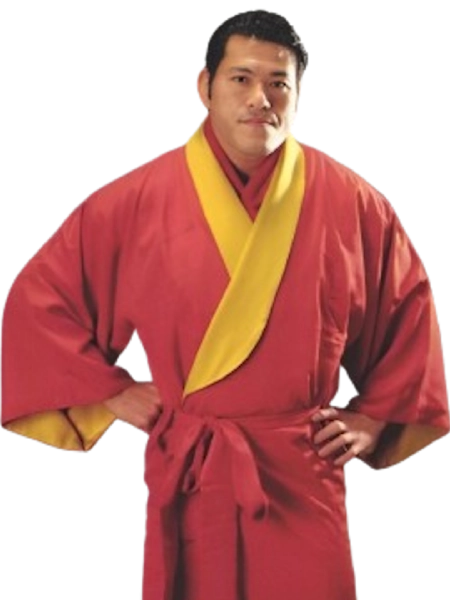
Antonio Inoki was a Japanese professional wrestler, promoter, and politician who became one of the defining figures of postwar Japanese professional wrestling. He was best known as the founder and longtime central star of New Japan Pro-Wrestling (NJPW), and for promoting a harder, more combative presentation that helped shape what later became known as strong style wrestling.
Outside of wrestling, Inoki became known for his work in politics, diplomacy, and for organizing major events that brought wrestling together with other combat sports.
He was born Kanji Inoki on February 20, 1943, in Yokohama, Japan. As a teenager, he moved with his family to Brazil, where he developed as an athlete and gained attention in track and field. He returned to Japan after being recruited by Rikidōzan, the leading star of early Japanese television wrestling, who brought him into the Japan Pro Wrestling Alliance system. Inoki trained in a mat-based style that emphasized grappling, conditioning, and structure.
He made his in-ring debut for the Japan Pro Wrestling Alliance on September 30, 1960, using the ring name Antonio. By 1963, he was billed as Antonio Inoki. This naming style was common in Japanese wrestling at the time, especially for wrestlers expected to compete internationally.
Throughout the rest of the decade, Inoki wrestled regularly in Japan and also toured overseas, including in North America. He competed for major promotions like the World Wide Wrestling Federation (WWWF), the National Wrestling Alliance (NWA), and Stampede Wrestling. These tours made him well known outside Japan and strengthened his reputation as a serious, athletic wrestler.
Inoki’s career ran alongside that of Giant Baba, who was also trained by Rikidōzan. Both became stars during a period when Japanese wrestling was influenced by business partnerships and match results.
By the early 1970s, Inoki had broken away from the organization that trained him. In 1972, he founded New Japan Pro-Wrestling (NJPW), which offered a modern alternative built around harder contact and a quicker pace. The promotion focused on strikes, grappling, and longer matches, treating wrestling as a competitive sport rather than pure entertainment. Inoki served as both promoter and main star, setting the standard as the company established itself.
During New Japan’s early years, Inoki also looked beyond traditional professional wrestling. His most famous effort came on June 26, 1976, when he faced heavyweight boxing champion Muhammad Ali at the Nippon Budokan in Tokyo.
The bout ended in a draw after fifteen rounds under heavily negotiated rules and sparked mixed opinions at the time. Still, it attracted worldwide attention by putting a wrestler against the world’s most famous boxer and treating it as a real sporting event. Looking back, many see it as an early example of the mixed-rules fights that led to modern mixed martial arts.
In 1979, during an overseas tour with the World Wrestling Federation (WWF), Inoki defeated Bob Backlund to win the WWF Heavyweight Championship. The match ended when Inoki knocked Backlund down with a kick, prompting the referee to stop the contest. Shortly afterward, the WWF reversed the decision, ruling the finish was invalid because of the use of an illegal move.
A rematch between Inoki and Backlund was then held, but it ended in a no-contest after interference from Tiger Jeet Singh, who was working with New Japan Pro-Wrestling at the time. Following that result, Inoki immediately vacated the championship. Because of these outcomes, the title change was not officially recognized, and the matches are listed as no contests in WWE’s official records.
From the late 1970s into the 1980s, Inoki stayed at the heart of New Japan, taking on top international wrestlers like Stan Hansen, Tiger Jeet Singh, Hulk Hogan, and Big Van Vader. These matches were important for the company’s tours and TV shows. They highlighted strength, endurance, and national pride, making Inoki both the top wrestler and the main symbol of the promotion.
Throughout this period, Inoki was closely associated with the NWF Heavyweight Championship, which New Japan treated as its top-level title during the company’s expansion. As the promotion moved into its next stage, he also helped formalize its championship structure.
On June 12, 1987, he defeated Masa Saito to become the first IWGP Heavyweight Champion, giving New Japan a top lineage that carried into its modern era. Even as his in-ring role gradually diminished, he remained the symbolic leader of the company, with emerging stars presented as successors to the standard he established.
In the ring, Inoki was known for his serious and disciplined style, mixing strikes with submission moves. He often used kicks like the enzuigiri and holds such as the octopus stretch and sleeper, making his matches tough and physical. His simple ring gear and calm attitude added to the image New Japan created for him.
By the late 1980s and into the 1990s, Inoki wrestled less but remained influential behind the scenes. He helped set the stage for the next generation, including wrestlers like Keiji Muto and Shinya Hashimoto.
His later career also included major international spectacles, most notably a 1995 event in Pyongyang, North Korea, co-promoted with World Championship Wrestling. Inoki wrestled Ric Flair on the show, and the reported crowds across the two nights were among the largest ever claimed for wrestling events.
That crossover into public life became formal in 1989, when Inoki founded the Sports and Peace Party and won election to Japan’s House of Councillors.
During his political career, he pursued high-profile international trips, including a 1990 visit to Iraq connected to the release of Japanese hostages. He also maintained long-standing involvement with North Korea, activities that were often controversial but kept him in the public eye well beyond wrestling.
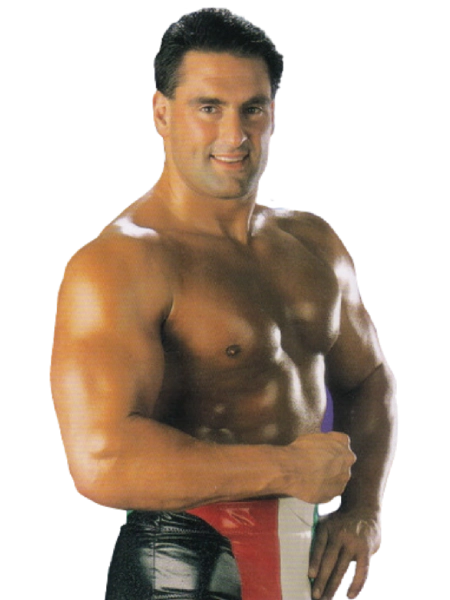
Inoki wrestled his retirement match on April 4, 1998, defeating Don Frye at the Tokyo Dome. Afterward, he remained active as a promoter, executive figure, and celebrity presence, even as health issues increasingly limited his involvement. In 2010, he was inducted into the WWE Hall of Fame, reflecting the international reputation he had built across decades.
Antonio Inoki died on October 1, 2022, at the age of 79, after battling amyloidosis. His legacy remains closely tied to New Japan Pro-Wrestling and to the idea that Japanese wrestling could be presented with a tougher, more sports-like edge. His career bridged wrestling’s postwar foundations and its modern global reach, and his influence remains visible in how New Japan presents its top stars.
Titles Held
| Belt | Won | Opponent(s) | Partner(s) | Event | Days Held |
|---|---|---|---|---|---|
| Jun 12, 1987 | IWGP Champion Series 1987 | 325 | |||
| Nov 30, 1979 | Toukon Series | 6 |

Matches
No matches recorded for this wrestler yet.





Share Your Thoughts on This Wrestler
You must be logged in to post a comment.