Career Summary
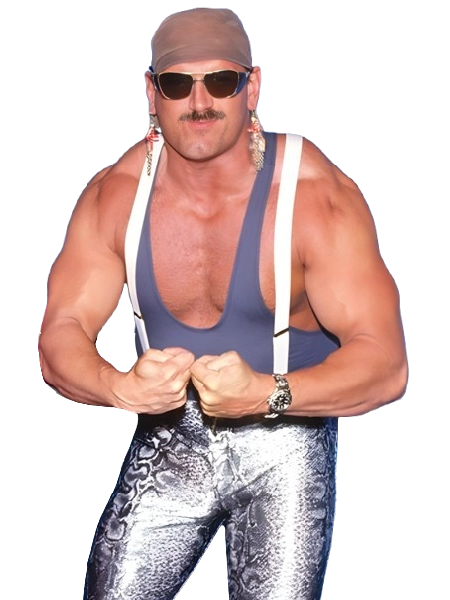
Jesse Ventura is remembered in wrestling as much for his voice and attitude as he is for his in ring career. Under the name Jesse “The Body” Ventura, he built a loud, flashy villain character with feather boas, bright jackets, and nonstop trash talk, then later became one of the defining color commentators of the 1980s before moving into acting and politics.
Ventura was born James George Janos on July 15, 1951, in Minneapolis, Minnesota. He grew up in a working-class family and later served in the United States Navy, going through Basic Underwater Demolition training and working with the Navy’s Underwater Demolition and SEAL units during the Vietnam era. His time in the military became a major part of his public image in later years.
After leaving the Navy in 1973, he turned to professional wrestling. Back home in Minnesota, he trained with Eddie Sharkey, a well-known trainer who helped break in several wrestlers from the region. Sharkey encouraged him to lean into his size and look. At six foot four and built like a bodybuilder, he attracted attention quickly. He took the ring name Jesse Ventura and added “The Body” as a nickname to underline his physique.
Ventura made his professional debut in 1975 in the Pacific Northwest territory of the National Wrestling Alliance (NWA), promoted by Don Owen. That region covered Oregon and Washington and was known for steady, hard-hitting wrestling.
Ventura learned on the job, working mid-card matches and talking himself into a bigger presence with loud promos that mocked the local fans. During this period, he won the NWA Pacific Northwest Heavyweight Championship twice and held the Pacific Northwest Tag Team Championship several times with partners Bull Ramos, Buddy Rose, and Jerry Oates.
After making his name in the Northwest, he moved into other NWA territories and the American Wrestling Association (AWA). In Hawaii, he held the NWA Hawaii Tag Team Championship with Steve Strong. In Memphis, he captured the AWA Southern Heavyweight Championship twice. Although these titles were regional rather than global, they kept him in the mix as a featured heel across several parts of the United States.
His highest profile run as an active wrestler came in the AWA in the late 1970s and early 1980s. There he teamed with Adrian Adonis as the East West Connection, playing up their backgrounds from opposite sides of the country and presenting themselves as arrogant heels.
They won the AWA World Tag Team Championship in 1980 and spent much of their time antagonizing fan favorites on television and live events. Ventura’s colorful outfits, sunglasses, and constant insults were as important as his in ring work and helped shape the persona he later took to the commentary booth.
Ventura joined the World Wrestling Federation (WWF) in the early 1980s. There he continued as a cocky rule breaker who feuded with fan favorites like Ivan Putski and Tito Santana, but serious health problems cut his ring career short. Blood clots in his lungs led doctors to advise him to stop wrestling. But rather than leave the business entirely, he decided to move into commentary.
As a broadcaster, he found a role that suited him even more than wrestling. Pairing first with Vince McMahon and later with Gorilla Monsoon and others, Ventura became the loud, sharp-tongued voice who defended the villains and questioned the motives of the heroes.
His work on shows like Prime Time Wrestling, All Star Wrestling, Saturday Night’s Main Event, and pay-per-views (including the first several WrestleManias) helped define the sound of WWF programming in the 1980s.
He praised aggressive tactics, mocked fan favorites, and gave colorful nicknames to wrestlers, all while explaining matches in a way that made heels seem clever rather than cheap.
Ventura left the WWF in 1990 after a dispute with Vince McMahon over licensing and video royalties. He later worked as a commentator for World Championship Wrestling (WCW) in the early 1990s, calling events like the SuperBrawl and other major shows.
His WCW work continued the same basic role, backing the villains and adding sarcasm to match calls, but it didn’t quite reach the same level of visibility as his WWF years.
In the ring, Ventura wrestled a methodical, power-based style. He used his size to slow opponents down with punches, stomps, bearhugs, and simple slams. His main finishing hold was the Body Breaker, an inverted bearhug and backbreaker style move where he would hoist an opponent off the mat and squeeze across the lower back.
While he didn’t have a long list of classic main event matches by modern standards, his presence, physique, and ability to stir up crowds made him a useful top-level villain in the territories where he worked.
Outside wrestling he built a second and third career as an actor and politician. While still connected to wrestling, he appeared in the movies Predator and The Running Man, playing tough or eccentric characters. In the early 1990s, he served as mayor of Brooklyn Park, Minnesota, then ran for governor of Minnesota in 1998 and won. His term as governor from 1999 to 2003 made him one of the few major American politicians to come directly from a wrestling and entertainment background.
Ventura’s relationship with WWF remained loose during his political years, but he made occasional returns, like when he served as a special referee at SummerSlam 1999 in Minneapolis in the triple threat match between Stone Cold Steve Austin (c), Mankind, and Triple H for the WWF Championship.
In 2004 he was inducted into the WWE Hall of Fame, recognized primarily for his breakthrough work as a commentator and for helping move wrestlers from the ring to mainstream television and film in the 1980s.
Jesse Ventura’s wrestling legacy is unusual. He was never a world champion in a major promotion, and his time as an active wrestler was cut short, but his impact as a talker and television personality was enormous.
His combination of a bodybuilder look, loud gear, and pointed commentary helped set a template for wrestlers who moved into broadcasting and for heel commentators who supported villains on air. Later careers in movies and politics only added to his public image, but for wrestling fans, he remains most closely linked with the bright colors and sharp comments of the 1980s boom years.
Matches
No matches recorded for this wrestler yet.




Share Your Thoughts on This Wrestler
You must be logged in to post a comment.