Randy “Macho Man” Savage was one of the most unforgettable stars in wrestling history. With his gravel-throated voice, neon robes, mirrored sunglasses, and a top-rope elbow drop that fans saw coming and still couldn’t wait to see, he turned every entrance, promo, and match into a must-watch moment.
But before the “Oooh yeah!” and packed arenas, he was just Randy Mario Poffo. A kid from Columbus, Ohio, born into a wrestling family. His father, Angelo Poffo, was a professional wrestler, so Randy grew up around the ring. But even then, wrestling wasn’t his first path.
In the early 1970s, he chased a career in baseball and played in the minor leagues under the name Randy Poffo. After a few seasons behind the plate and a shoulder injury that limited his throwing, he made the full-time switch to wrestling. That decision not only changed his life but also the entire landscape of professional wrestling.
His early rise came in his family’s promotion, International Championship Wrestling, which ran in the Kentucky territory from 1978 to 1984 and operated outside the National Wrestling Alliance (NWA). Savage was the driving force behind the group. He headlined shows, traded the top title with his brother Lanny, and developed the intense, fiery style that would later define his interviews.
When ICW closed, he moved to Memphis and to the Continental Wrestling Association, where his heated feud with Jerry “The King” Lawler drew crowds and headlines. Their rivalry reached its peak on June 3, 1985, in a Loser Leaves Town match. Savage lost that match and left Memphis behind, but his next move took him to a national audience.
That same summer, he signed with the World Wrestling Federation (WWF) and was introduced on television as a prized free agent. After brushing off the established managers, he shocked the audience by unveiling a new face, Miss Elizabeth. Her calm, graceful presence beside his hair-trigger temper gave the act a striking contrast and helped him climb through the promotion fast.
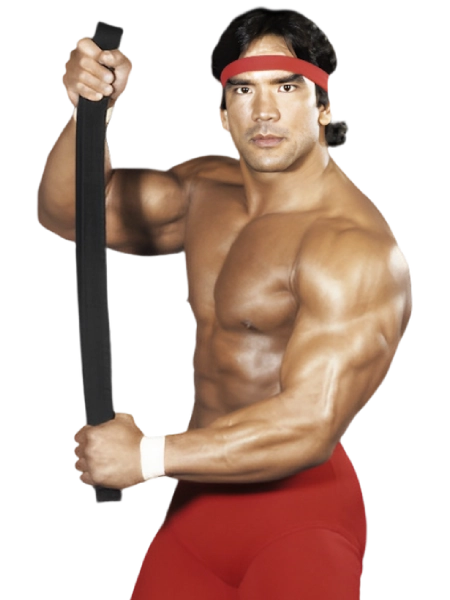
On February 8, 1986, at the Boston Garden, he beat Tito Santana for the Intercontinental Championship and held it for a year. That reign produced a famous rivalry with Ricky “The Dragon” Steamboat that peaked at WrestleMania III on March 29, 1987, in Pontiac, Michigan. Their tightly timed match ended with Steamboat winning the title and still stands as one of the era’s most praised performances.
By early 1988, the crowd had turned in his favor. At WrestleMania IV on March 27, he wrestled four times in one night to win the tournament for the vacant WWF World Heavyweight Championship, defeating Ted DiBiase in the final with Hulk Hogan in his corner.
The “Mega Powers” partnership with Hogan drove the company through that year, then fell apart in a story built on jealousy and mistrust. Savage lost the title to Hogan at WrestleMania V in April 1989 and reinvented himself as the Macho King later that year after taking the crown from Jim Duggan, with Sensational Sherri adding a harder edge to his presentation.
In 1991, he faced the Ultimate Warrior in a career match at WrestleMania VII. After the loss, Elizabeth returned to protect him from Sherri in an emotional scene that led to their on-air wedding at SummerSlam that August.
Savage returned to active wrestling and won his second WWF world title at WrestleMania VIII on April 5, 1992, beating Ric Flair, before gradually shifting toward commentary on Monday Night Raw while still working select programs through 1994.
When his WWF contract ended in late 1994, he jumped to World Championship Wrestling (WCW). He announced himself on WCW Saturday Night on December 3rd and quickly stepped into main events, renewing his feud with Ric Flair.
Between late 1995 and 1999, he became a four-time WCW World Heavyweight Champion, worked through the company’s boom during the nWo years, and joined the Wolfpac during the 1998 split. His final WCW title came at Bash at the Beach on July 11, 1999, when a tag-team stipulation made the deciding fall count for the championship, and he pinned Kevin Nash. However, he would lose the belt to Hulk Hogan on Nitro the next night.
Near the end of his in-ring career, he made a brief return with TNA, teaming with AJ Styles and Jeff Hardy in a six-man tag at Turning Point on December 5, 2004, against Jeff Jarrett, Kevin Nash, and Scott Hall. It was a short, nostalgic cap to a three-decade career that began in the territories and stretched across cable’s peak years.
What made Randy Savage different wasn’t just the look or the voice. It was how he moved, how he thought, and how he built his matches. He used quick punches and body shots to wear opponents down, mixed in sudden rule-breaking to change momentum, and often chased his opponents to the floor to create space.
His signature move, the double axe handle from the top rope to the outside, was a staple of his matches. When it was time to finish, he would deliver a snap body slam, climb to the top, glance at Elizabeth or the crowd, and launch into a high, clean elbow drop. His matches felt like performances that built tension and always ended with a payoff.
Everything about his presentation was deliberate. His entrance music, Pomp and Circumstance, gave him a regal air. His outfits were loud, colorful, and instantly recognizable. His promos were full of strange phrasing, wild intensity, and memorable lines that became part of wrestling’s pop culture. And almost every promo ended the same way, with his voice dropping into a growl as he said, “Oooh yeah!”
Outside of wrestling, Savage appeared in movies, television shows, and voiceover work, but in later years, he stepped away from the spotlight. On May 20, 2011, while driving near his home in Seminole, Florida, he suffered a heart attack behind the wheel and crashed his car. The medical examiner ruled that his death was caused by heart disease. He was 58 years old.
In 2015, WWE honored his legacy by inducting him into the Hall of Fame, with his brother Lanny Poffo accepting and Hulk Hogan delivering the tribute. It was a full-circle moment for a wrestler who helped define an entire era of the business.









Share Your Thoughts on This Wrestler
You must be logged in to post a comment.